Alicia Sevilla

03 · Music

The work

A catalogue of more than eighty compositions. Six released works and, behind each one, a particular story.

Discography

Her work, from beginning to end

The six released works. Four of them play right here — press a cover for the whole album, or pick a single track from the list; the two scores are on Spotify.

Single · AIR Studios, London

Noble Heart

First orchestral composition

Her first orchestral work, based on the Czech fairy tale The Burning Bird and the Fiery Fox. It was the final work of her composition master's at Berklee and the first she conducted herself, recorded at AIR Studios in London.

The video documents the recording session with the orchestra.

2017 · Second personal album

Memories

12 pieces · piano and string quartet

Her second personal record, made in Denmark: twelve pieces in which she traces her own story with clarity and depth, and settles into the language she had found on Moments. Memories of particular years turned into hummable melodies.

2014 · First personal album

Moments

12 pieces · piano and strings

Her first personal record: the work in which she introduces herself, her identity and her style. Piano, violin, viola, cello, double bass and guitar in the service of music that conjures images. It sold out Bilbao two years running.

This is where Obra de Amor y Gracia comes from, her most listened-to piece, with a video shot in a theatre.

2012 · Theatre score

La Historia del Noctámbulo

11 pieces

Her first commission as a composer, for a wordless play: eleven pieces of dreamlike beauty that carry the whole narrative without a single word spoken on stage. They were performed live, night after night, with piano, percussion, flute and cello.

2023 · Score · Documentary

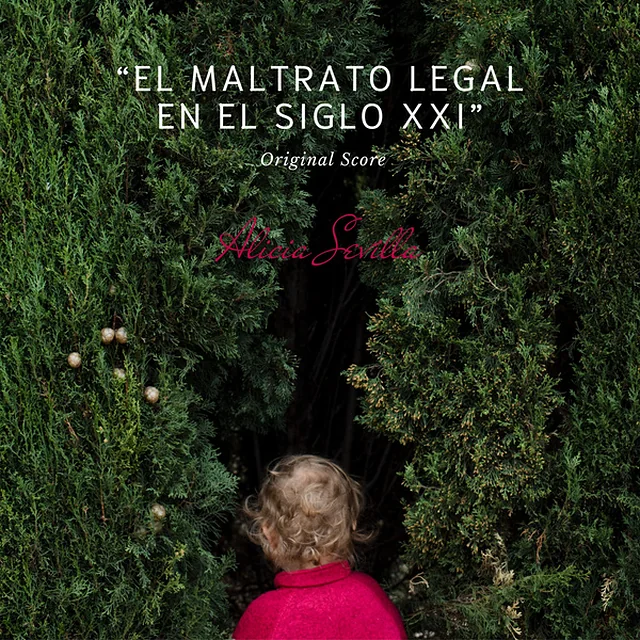
El maltrato legal en el siglo XXI

Original music for documentary

Original music for the documentary by Bittor Arnaiz and Josu Goikoetxea on failed parenting, premiered on EITB. A hard commission because the subject is hard: depth, and at the same time a melody that calls for responsibility.

2023 · Score · Theatre

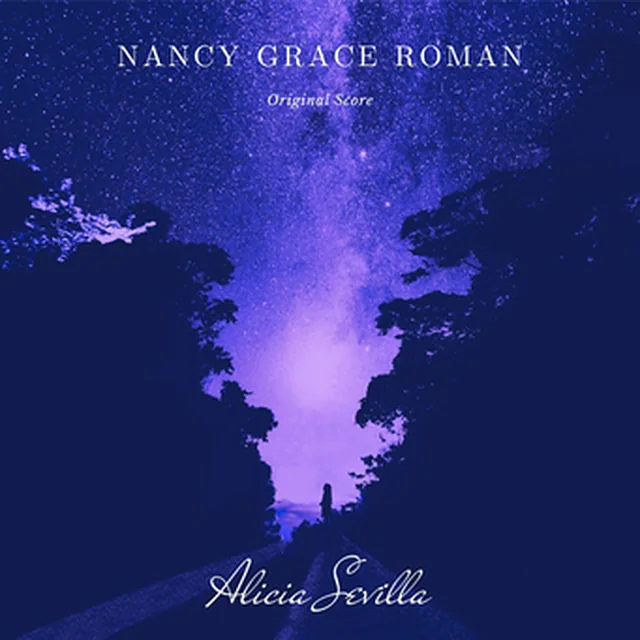
Nancy Grace Roman

Original music for the stage

The music for the play that brings to the stage the life of Nancy Grace Roman, the astronomer who drove the Hubble telescope forward. More than a biography in sound: an attempt to translate the evolution of the universe into music.

Read the story behind each work

In depth

The story behind each work

Where each work came from, what it set out to say and how it was made.

Noble Heart

Noble Heart grew out of a Czech fairy tale, The Burning Bird and the Fiery Fox, and was the final work of her composition master's at Berklee, where she worked specifically on orchestral writing for the screen. It won her the Outstanding Scholar Award.

To get from the story to the score, Alicia used drawing. Through the process she translated the tale into colour, intensity and shape, and out of those drawings came the timbres, the dynamics and the shape of each theme. The image was the middle step between the story and the music.

It was recorded at AIR Studios in London, one of the world's reference rooms for film music, and it was also the first orchestral work she conducted herself.

Watch the recording video

Memories

"After a long period of composing, rehearsing and recording, today I can share the music that once began as an intimate dialogue with my piano." That is how she introduced it in December 2017.

These are twelve pieces reflecting memories of the preceding years: struggles, dreams, joys and growth. Memories that, in time, became lights she wanted to switch back on. And although they came from her, they speak of experiences we all share and that make us human.

With the piano out front and a string quartet giving it body, this time the recording was made in Denmark, where she was living then. If the first record was about finding a voice of her own, this one is about settling into it.

Listen to the album

Moments

Moments is her first personal record, and it works as an introduction: who Alicia is and how she sounds.

It is also where her musical identity is set down for the first time: a style of her own, recognisable, which from here on holds up everything else.

What comes out of it is music that conjures images and that, emotionally, invites an inward journey. The piano carries the voice, but the strings give it body and perspective; the guitar brings an almost domestic warmth.

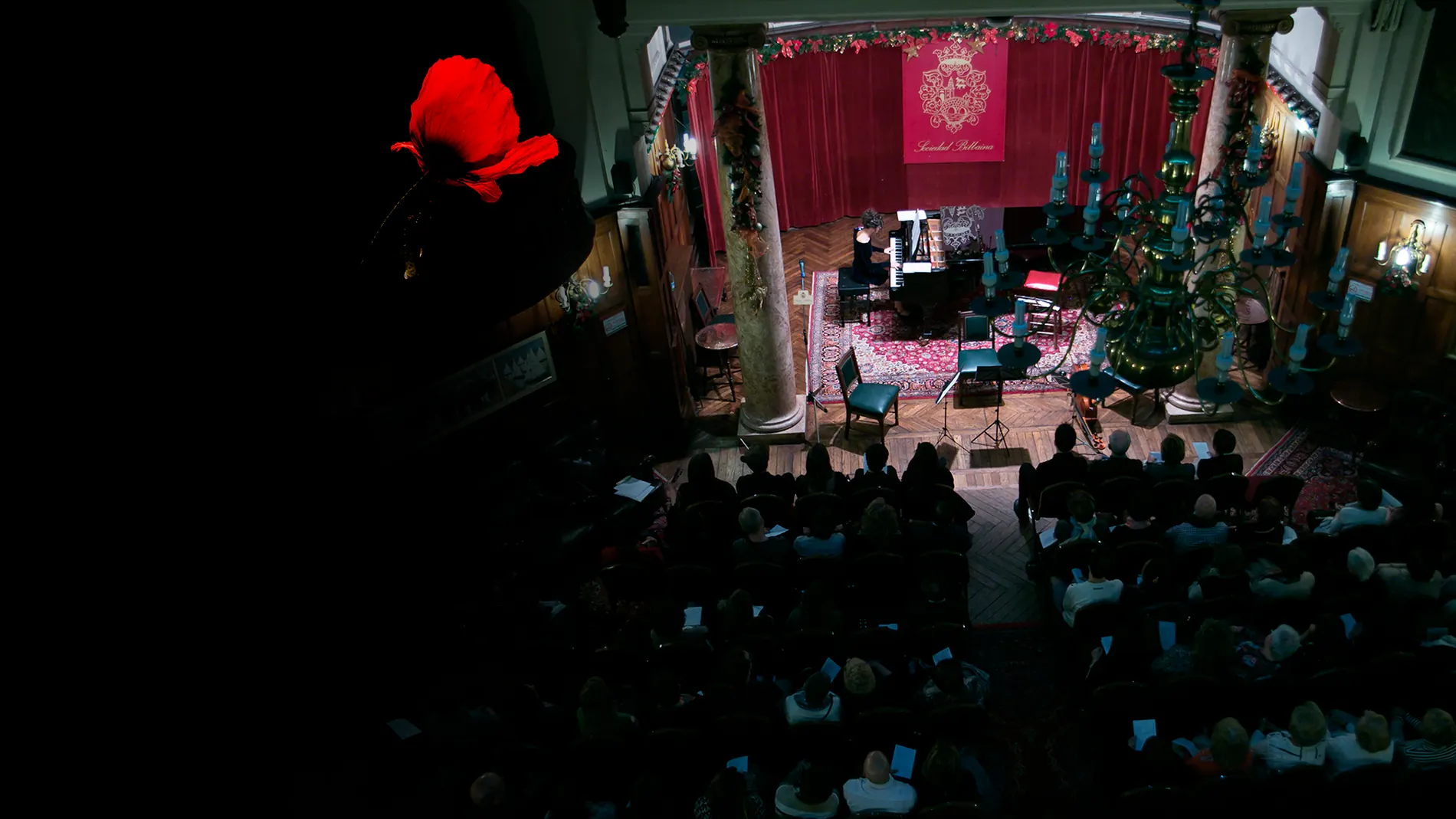
It premiered on 21 June 2014 at the Sociedad Bilbaína, sold out, with some two hundred people in the room. It returned to the same venue in December 2015, and in 2016 it reached Copenhagen in a third version, again to a full house.

Listen to the album

La Historia del Noctámbulo

It was her first commission as a composer, and it came with an unusual condition: the play was wordless. El Noctámbulo is not theatre with background music, but a work in which music occupies the place text would normally take. The performers do not speak, and the entire narrative weight — the humour, the menace, the tenderness — is carried from the pit. That forced Alicia to compose like a dramatist: each motif had to identify a character, each harmonic change had to move a scene forward.

Nor was the score written afterwards, over a finished production. Alicia composed while watching the company work, seeing the scenes come into being, so that music and dramaturgy grew at the same time. It was a joint creative process, in which each shaped the other.

The result is eleven pieces of dreamlike beauty that were never played from a recording: they were performed live, night after night, with piano, percussion, flute and cello.

It premiered at the Teatro Campos Elíseos in Bilbao at the end of 2012, directed by Ricardo Padilla, and in 2013 it ran for five performances at the Teatro Nuevo Apolo in Madrid. The piece Celestial was later chosen for Cáritas Española's campaign "Antes de 2015 actúa".

Listen to the album

El maltrato legal en el siglo XXI

The documentary, directed by psychologists Bittor Arnaiz and Josu Goikoetxea and produced by Agintzari, starts from an uncomfortable conviction: the mental health of children and adolescents is at risk, and the way they are raised has a great deal to do with it. Its authors, each with almost fifteen years in child protection at Bilbao City Council, condensed more than six hours of footage into thirty-four minutes. It premiered on EITB.

It was a hard commission, and it was hard because of the subject. Music that underlined, that dramatised, would have turned testimony into spectacle; absent music would have left the viewer with nothing to hold on to. Alicia took it on because she felt it mattered that the conversation happen.

The score goes after both things at once: depth, to hold up what is being told, and a melody that does not settle into sadness but calls for responsibility. It accompanies without intruding, and lets silence do the hardest work.

Nancy Grace Roman

The play is a biography: it brings to the stage the life of Nancy Grace Roman (1925–2018), the American astronomer who was NASA's first chief of astronomy and the first woman to hold an executive position at the agency. She drove forward the project that would become the Hubble Space Telescope, which is why she is known as "the mother of Hubble".

Alicia recognised herself in her immediately: a tenacious woman, determined to pursue her dreams and to claim a place and a space of her own in a field that did not offer either. Composing her story was, in large part, composing her own.

That is why the score does not simply accompany the events of a life. What Alicia tried to translate into music was what Roman devoted hers to: the evolution of the universe, from its origin to the unfathomable scale her telescopes taught us to look at.

Estonia piano

A warm and
human sound

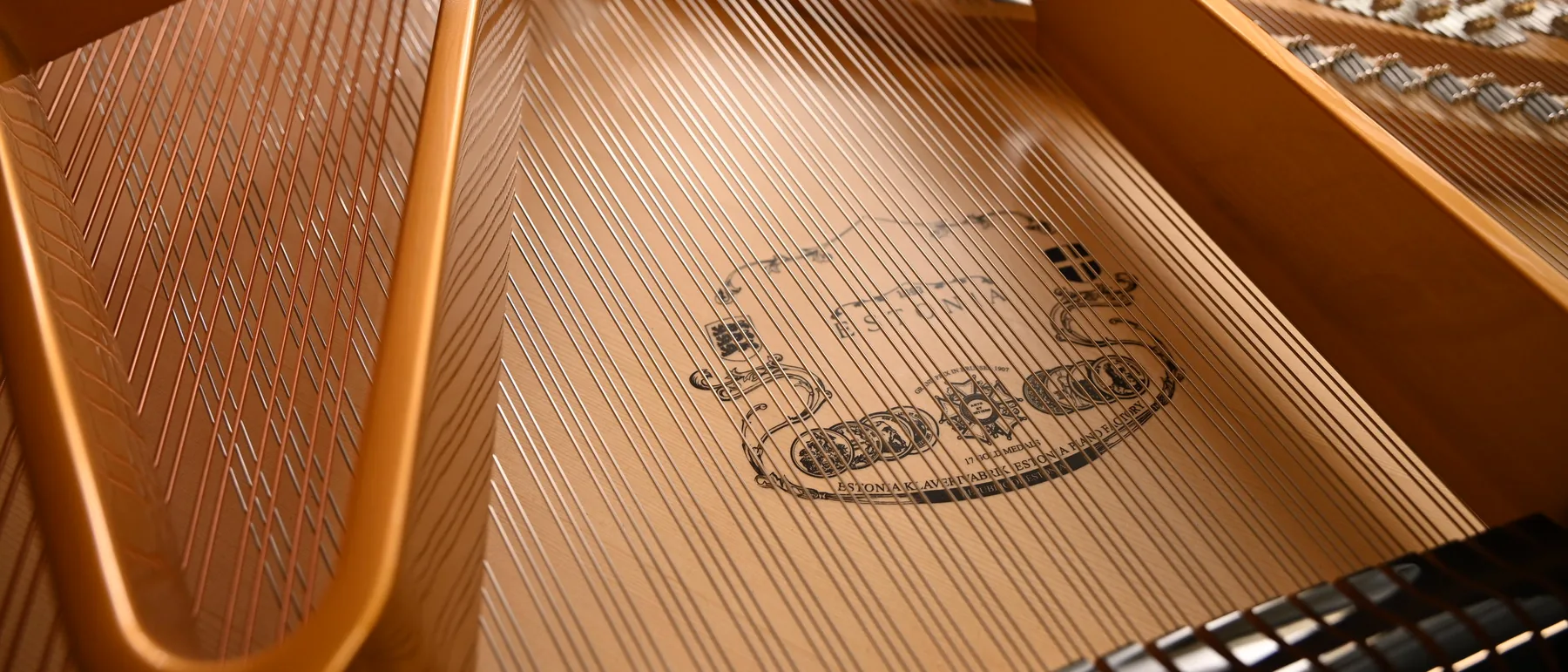
Her Estonia piano is the only one of its model in Spain. It is not a footnote: it is a deliberate choice of a warm, human sound, and the basis of a sound identity that is hers and recognisable.

The soundboards are made by hand, exclusively from the highest quality resonant spruce grown at altitude in the Swiss and Italian Alps, to achieve the fullest tonal expression.

Ready to compose and to record.

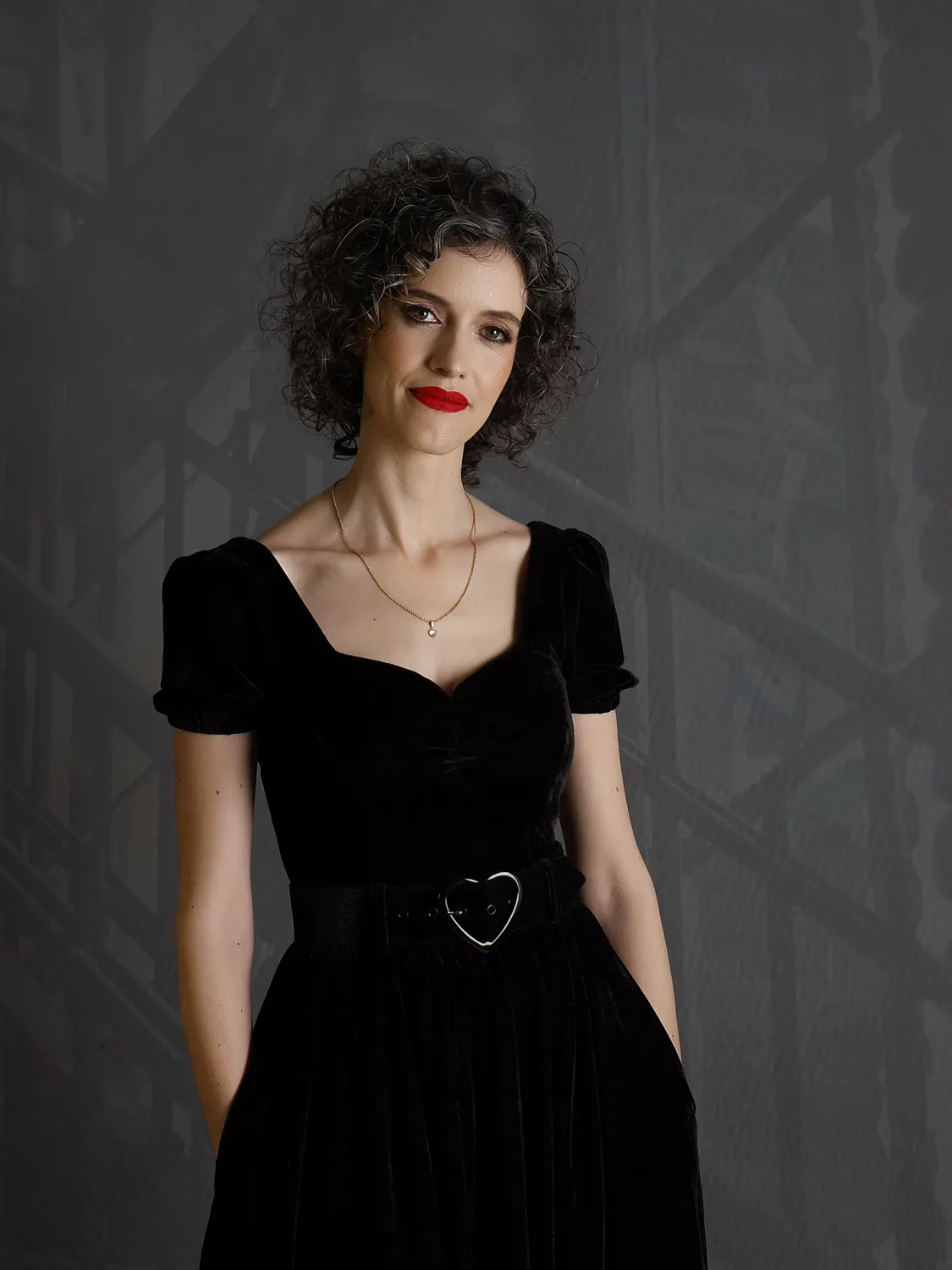
Alicia Sevilla in a black velvet dress
Soundboard of an Estonia piano, with the factory stamp engraved beneath the strings

The language

Her sound, rather than displaying virtuosity,
seeks to communicate emotion and truth.

A voice of her own

She composes freely, with no borrowed formulas and no concessions to fashion: every piece sounds unmistakably hers. That authenticity sits alongside real discipline, artistic judgement and an uncommon care for sound quality.

Time

Her handling of rubato, resonance and silence reveals a deep understanding of musical time and an organic connection to the instrument.

Experience

Every composition is a living, inward and singular experience. The music goes on existing in the air after it has sounded.

Live

This music changes when it sounds in a room

Solo piano, piano and strings, or full ensemble, with a staging designed so that the silence can be heard too.